Program Overview
Stand Out to Top-Tier Universities
Led by Dr. Mohammad Mohebbi, a Tenured Computer Science Professor specializing in AI, Machine Learning, and Bioinformatics, this program takes students far beyond standard high school AP courses. Over 15 weeks, students will engage in cutting-edge research at the intersection of AI and Genetics. They will learn to write Python code, visualize 3D molecular structures, and train Machine Learning models, culminating in a professional, LaTeX-typeset research paper suitable for submission to science fairs or the IEEE URTC conference.
The Guarantee: Tangible Results for College Admissions
By completing this rigorous program, you guarantee that your college application will stand out from the crowd. Every graduating student earns:
Personalized Letter of Recommendation
Written directly by a Tenured University Professor, highlighting your specific research achievements and coding abilities.
Completed Research Manuscript
A fully typeset LaTeX paper detailing your unique Machine Learning or Structural Biology project, ready for science fair submission.
Certificate of Completion
An official certificate from Withly LLC verifying your mastery of Python, Scikit-Learn, and Structural Bioinformatics.
Elite Application Portfolio
A verifiable GitHub repository of your AI code and molecular renders to link directly in your Common App.
Real, Publishable Science
We don't do "toy" projects. The research you conduct in this program is of such high caliber that past students mentored by Dr. Mohebbi have successfully published their findings as official co-authors in peer-reviewed IEEE conference proceedings.
➔ To learn more about Dr. Mohebbi's academic credentials and publication record, click here to view his full profile.
Read a Student IEEE Publication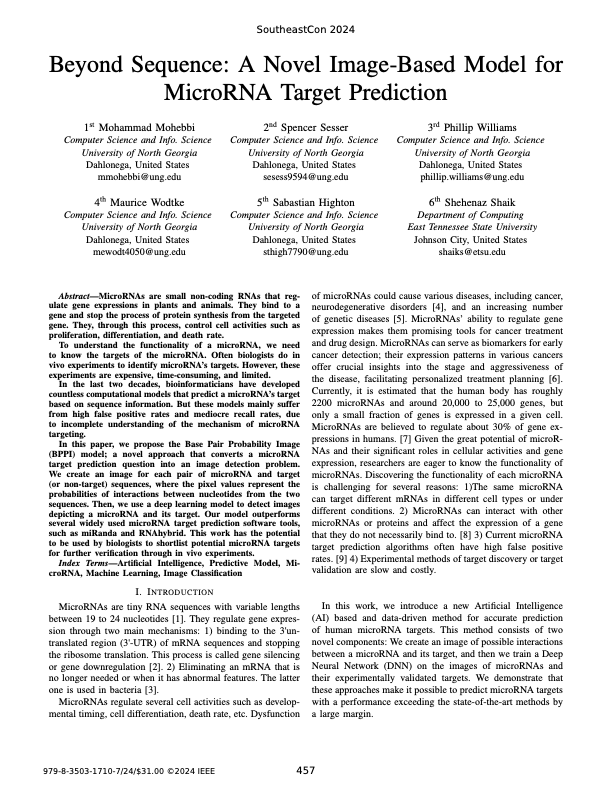
Curriculum & Core Skills
A comprehensive, step-by-step roadmap taking students from coding fundamentals to an original, publishable research manuscript.
Python & Genomic Analysis
- 1. Python Programming Fundamentals: Getting familiar with professional developer tools (PyCharm), core syntax, statements, and weekly mini-projects to build experience from scratch.
- 2. Computational Sequence Analysis: Working with authentic genomic data formats (FASTA). Hands-on project: comparative genome analysis (E. coli vs. geothermal thermophiles) to discover how nucleotide composition drives biological thermal stability.
Structural Databases & PyMOL
- 3. Mining Global Databases (rcsb.org): Learning how to extract 3D macromolecular structures from the Protein Data Bank (PDB) and dissecting coordinate syntax and file formats.
- 4. 3D Molecular Graphics with PyMOL: Visualizing proteins, nucleic acids, and viral architectures in 3D space, and mastering how to call and automate PyMOL programmatically directly from Python scripts.
Investigation & Advanced AI
- 5. Scientific Literature Mastery: Learning how to read and dissect peer-reviewed papers to extract the core insight without getting overwhelmed by technical jargon.
- 6. Research Project of Your Choice: In-depth investigation into a biological mechanism or disease target tailored to the student's personal interests.
- 9. Machine Learning & Deep Learning Specialized Track: Optional project-dependent module: Training predictive AI models and neural networks on clinical and genomic datasets to discover disease biomarkers.
Academic Publication & Defense
- 7. Formal Manuscript Architecture: Structuring authentic academic deliverables: Abstract, Introduction, Data Collection, Methodology, Analysis, and Discussion.
- 8. Professional Technical Typesetting: Mastering LaTeX and Overleaf to compile two-column, journal-grade manuscripts and presentation slide decks ready for competitions and college admissions.
Research Track 1: Structural Biology
Students learn to use professional molecular graphics software to visualize how proteins and DNA interact in 3D space. They investigate the biological mechanisms of cancer, genetic mutations, and viral infections.
Gene Silencing: AGO2 & microRNA
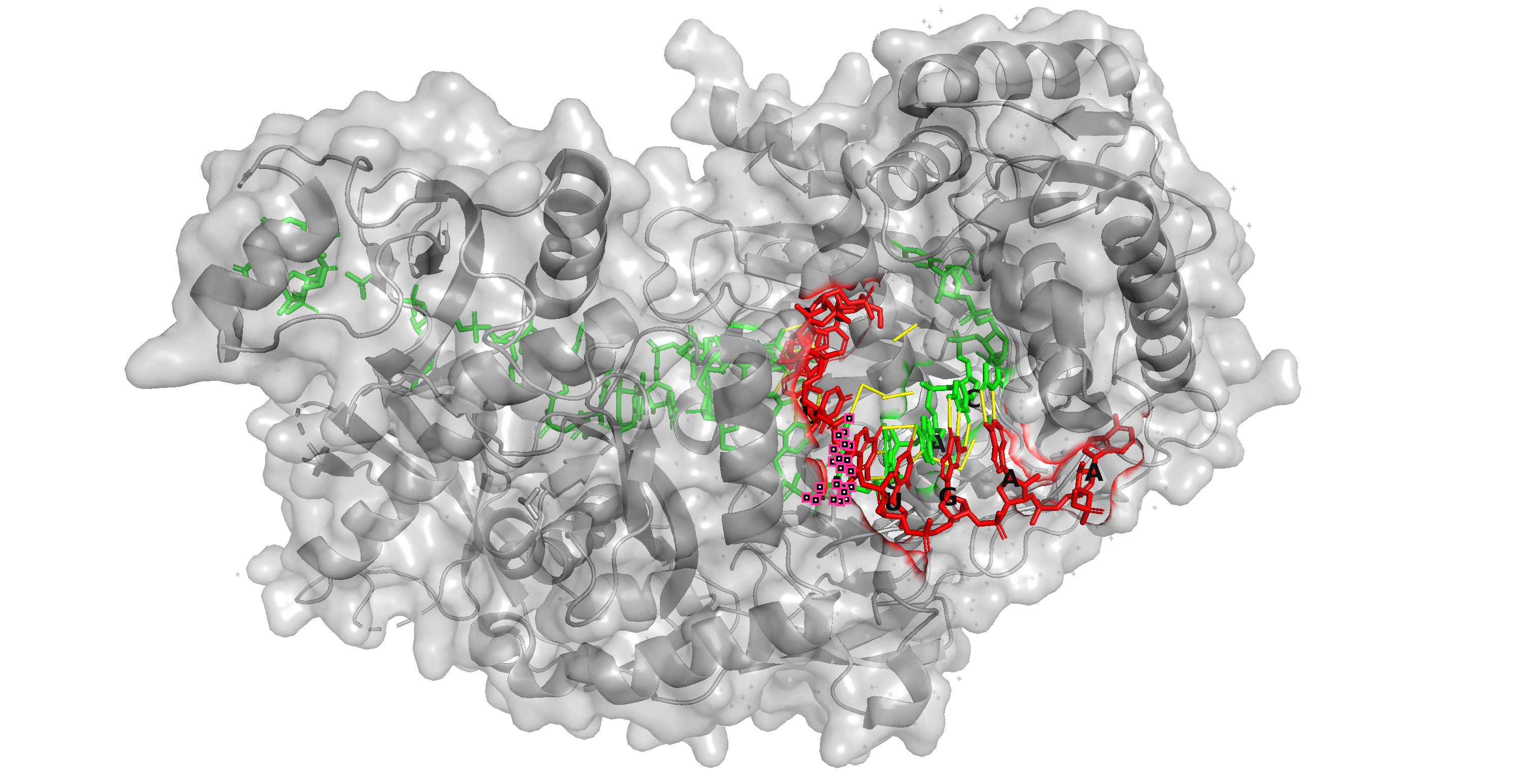
Students explore the core machinery of RNA interference. In this project, they render the human Argonaute 2 (AGO2) protein and visualize exactly how it uses a single-stranded microRNA "guide" to hunt down and silence complementary mRNA targets, preventing harmful proteins from being produced.
The Molecular Scissors: Dicer
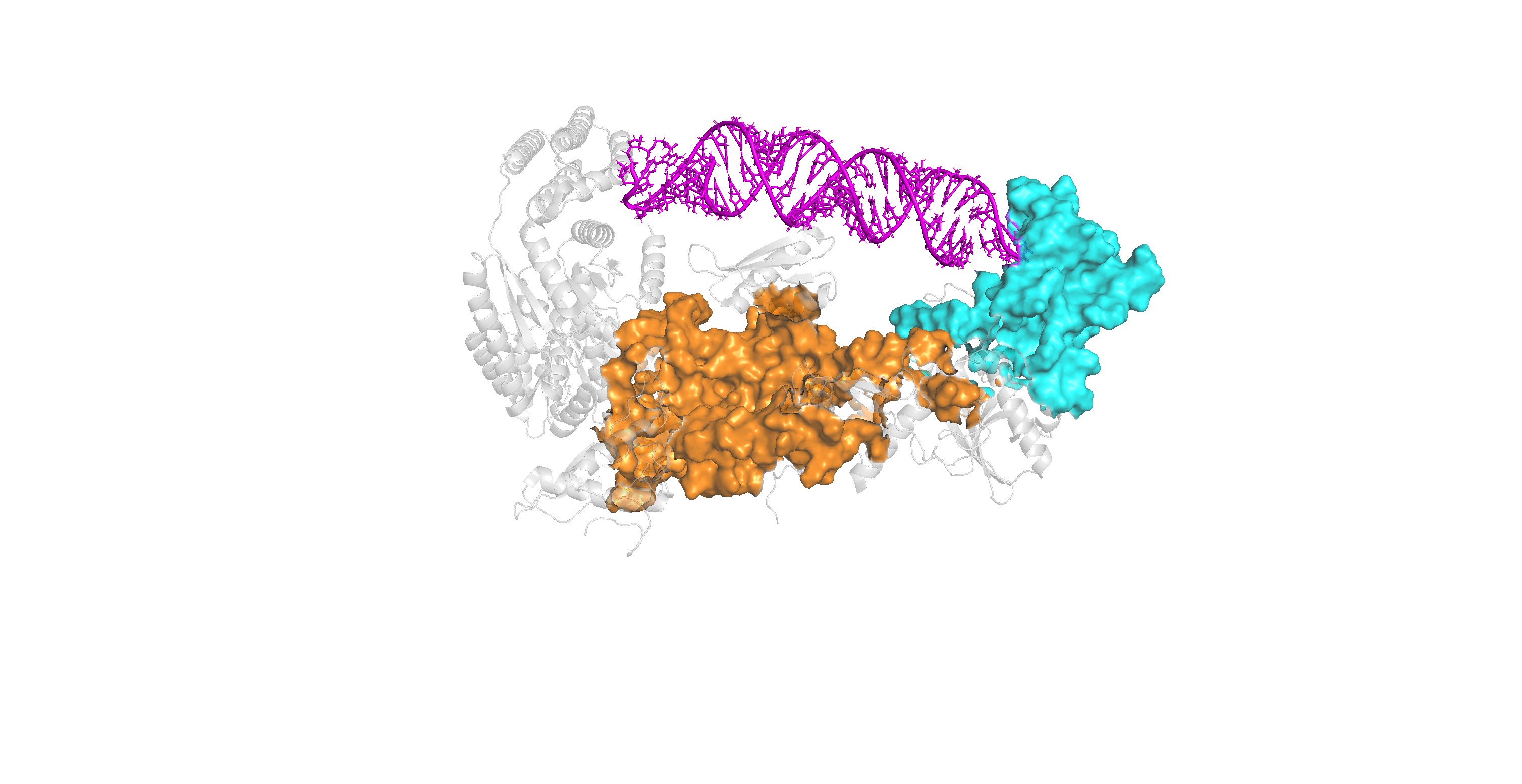
Students visualize the precise 3D mechanics of the human immune system. In this project, they render the massive Dicer enzyme (gray) as it swallows a microRNA hairpin (magenta). By highlighting the catalytic pockets, students prove how the protein mathematically measures and cuts the RNA.
Viral Sabotage: Tombusvirus p19
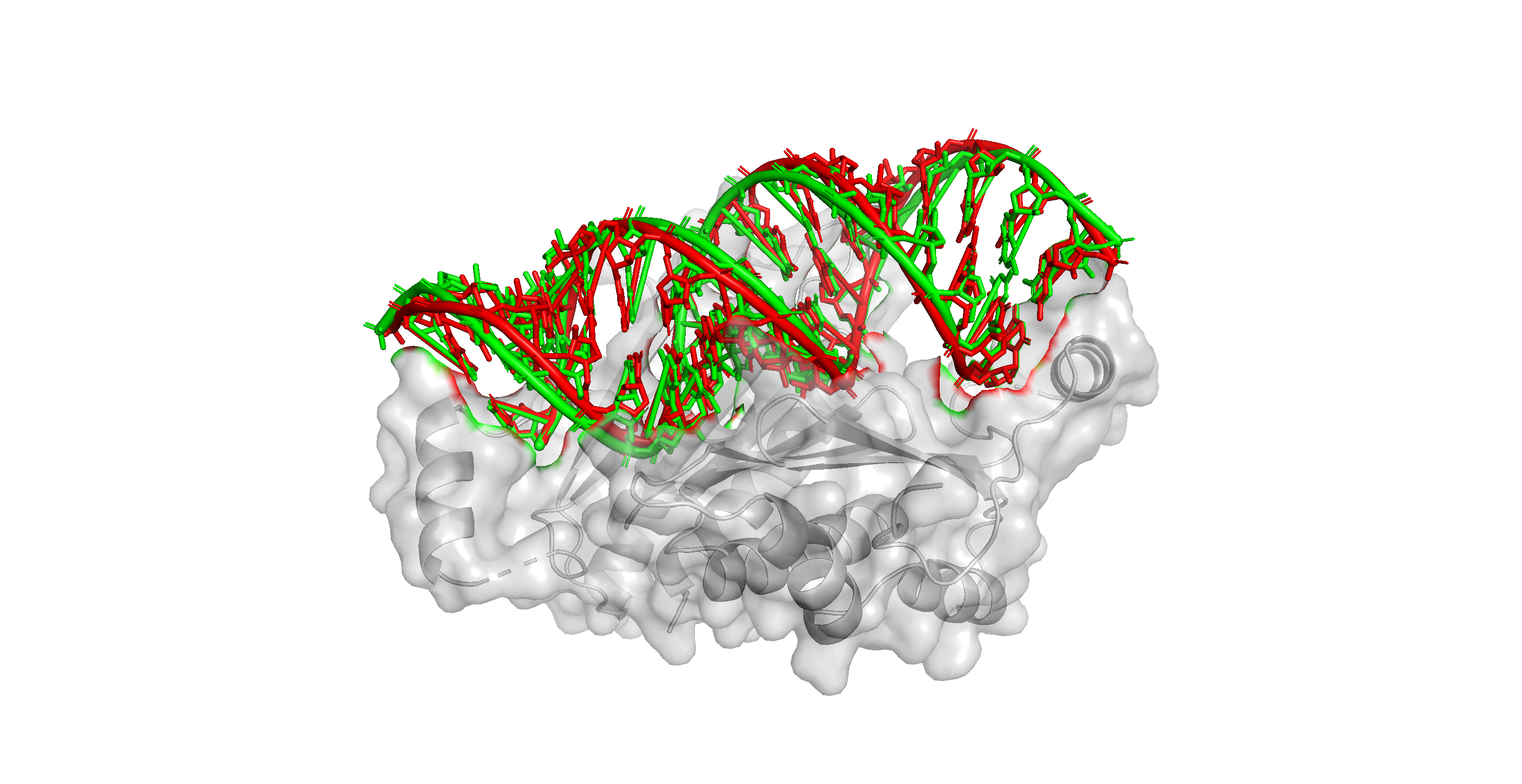
How do viruses evade our immune system? Students reconstruct the Tombusvirus p19 protein to find out. By rendering the viral protein as a transparent surface, students can clearly see how it acts as a molecular "caliper" to hijack and lock away the host's defensive RNA (green/red) before it can fight back.
Cancer Mutations in AGO2
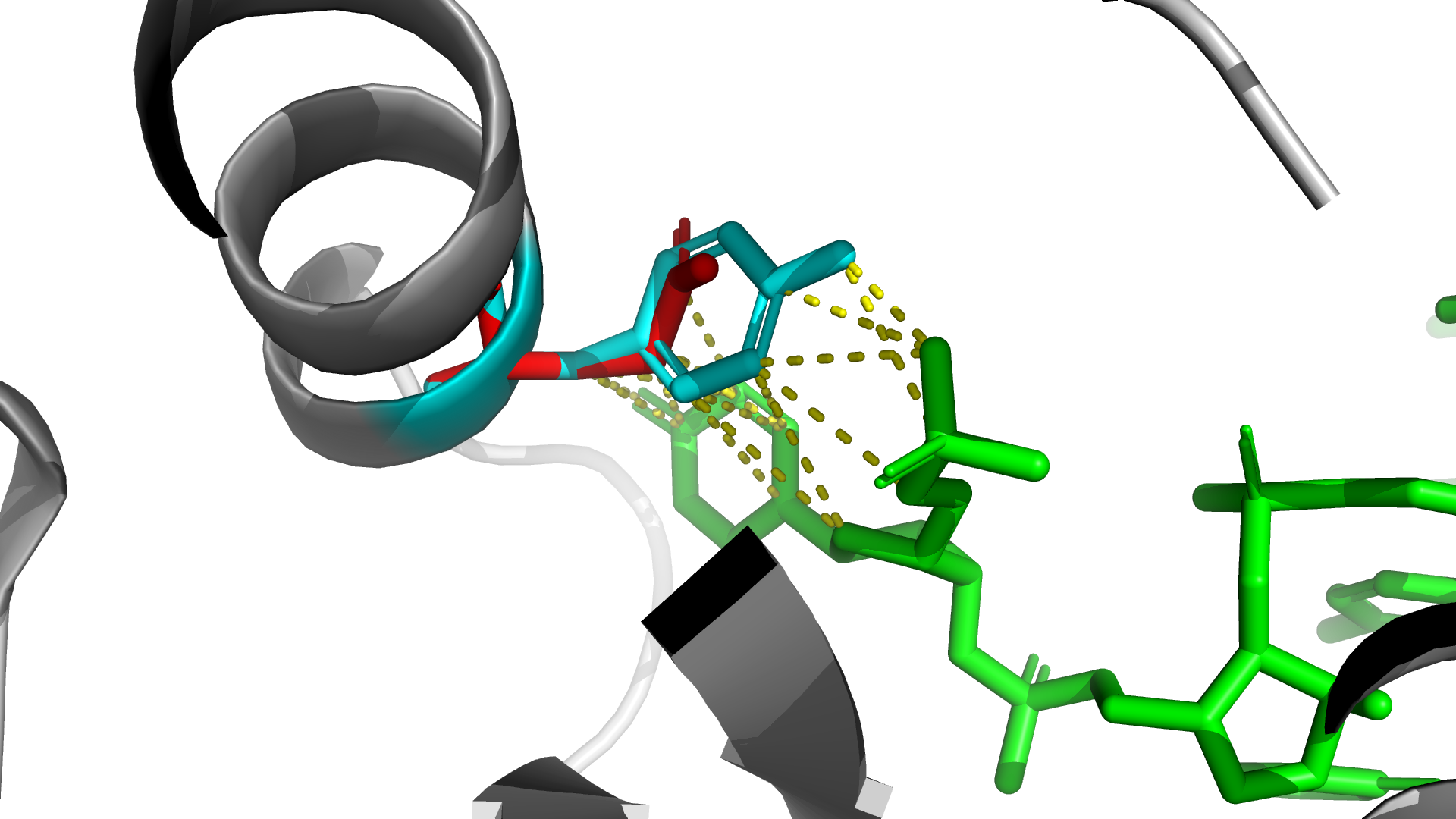
Students use computational mutagenesis to simulate how cancer-causing DNA mutations destroy protein function. In this render, a healthy Tyrosine amino acid (Cyan) perfectly anchors the RNA. But when mutated to a Glutamate (Red), the pocket is physically repelled and destroyed, leading to disease.
Research Track 2: AI & Machine Learning
Students write professional Python code and utilize Cloud-Based GPU Supercomputing infrastructure to train advanced Machine Learning models on massive, authentic clinical and genomic datasets.
Liquid Biopsies & Biomarker Discovery
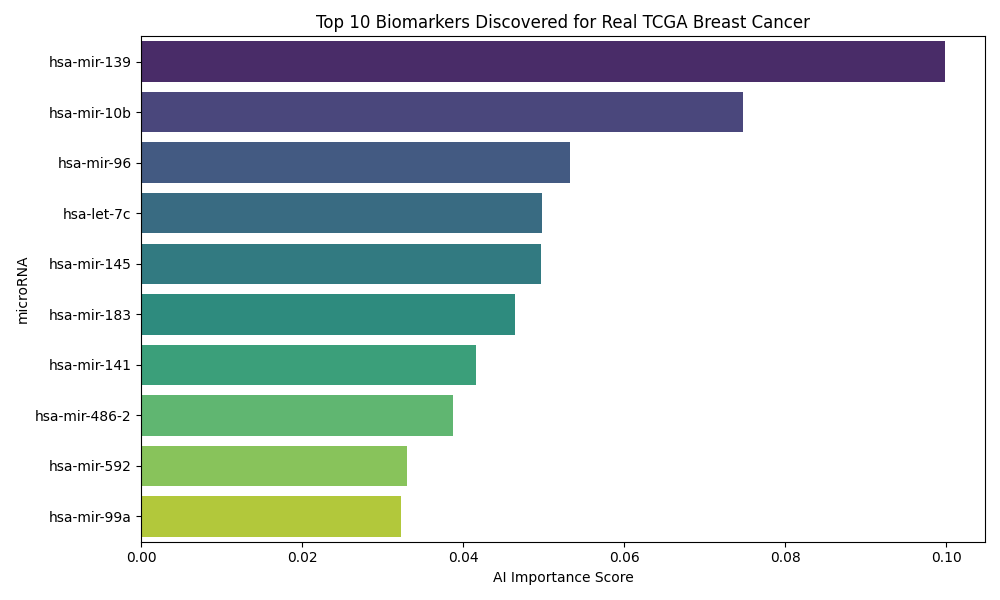
Each student is assigned a unique dataset for a specific disease (e.g., Breast, Lung, or Pancreatic Cancer). They write Python code utilizing Pandas and Scikit-Learn to train an AI model on cloud GPU supercomputers. After achieving >95% diagnostic accuracy, the students extract the AI's internal logic to discover the specific genetic biomarkers driving the disease.
Or... A Project of Your Own Design
Have a specific disease, genetic mutation, or AI application you are passionate about? Because this program is highly personalized, students have the total freedom to propose and pursue their own unique research questions under the guidance of Dr. Mohebbi.
No Experience? No Problem.
If these topics feel daunting, don't worry! You will learn everything from A to Z during these 15 weeks by sitting right next to Dr. Mohebbi and building these projects together. No coding or advanced biology prerequisites are needed. We will teach you everything from scratch.
Ready to Transform Your College Application?
Space is strictly limited to 5 high-achieving students per cohort to ensure personalized, 1-on-1 mentorship.